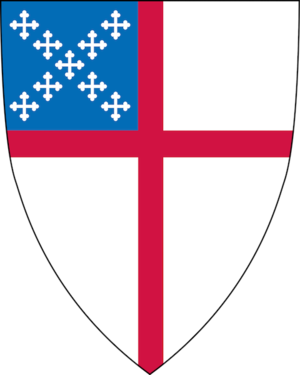
What is an Episcopalian?
The History of the Episcopal Church begins in the Church of England. The beginnings of the Church of England, from which The Episcopal Church derives, date to at least the second century, when merchants and other travelers first brought Christianity to England. It is customary to regard St. Augustine of Canterbury’s mission to England in 597 as marking the formal beginning of the church under papal authority, as it was to be throughout the Middle Ages.
In its modern form, the church dates from the English Reformation of the 16th century, when royal supremacy was established and the authority of the papacy was repudiated. With the advent of British colonization, the Church of England was established on every continent. In time, these churches gained their independence, but retained connections with the mother church in the Anglican Communion.
Visit the Episcopal Church website here.

Episcopal/Episcopalian?
A common error is the use of the words “Episcopal” and “Episcopalian”. Episcopal is an adjective. It originates from the Latin word episcopus, meaning bishop (or overseer, guardian, or elder). You have Episcopal bishops and Episcopal churches, not Episcopalian bishops or the Episcopalian Church. Episcopalian is a noun, and it refers to belonging to the Episcopal Church. Members of the Episcopal Church are Episcopalians, not Episcopals.
I’m not Episcopalian. Can I come to St. Mark's?
Yes! All are welcome! It can sometimes feel intimidating to enter an unfamiliar church. You are our respected and welcome guest, and we hope you will feel as comfortable in our house as you would in that of a valued friend.
What do Episcopalians believe?
The beliefs of the Episcopal Church are summed up in our Baptismal Covenant. A mini catechism used at baptisms and on Easter and other special occasions, the Baptismal Covenant opens with a question-and-answer version of the statement of faith that is the Apostles’ Creed and adds five questions regarding how we, as Christians, are called to live out our faith. Click on the following links to find out more about what we believe.
How do Episcopalians worship?
Our worship is liturgical, which literally means "the work of the people." Everyone at St. Mark's participates in our worship services in the follow ways:
- through communal prayer
- through singing
- through engaging all your senses
- through participating in the rhythm of the church year
- by being commissioned to be Christ’s hands in the world
The Book of Common Prayer (B.C.P. or Prayer Book) outlines the liturgy. If you are familiar with Roman Catholic or Lutheran services, you will find Episcopal services remarkably similar.
What is the Book of Common Prayer?
The Book of Common Prayer is the prayer book used by the Episcopal Church. It is a treasure chest full of devotional and teaching resources for individuals and congregations, but it is also the primary symbol of our unity. We, who are many and diverse, come together in Christ through our worship, our common prayer. A copy of the book of common prayer can be found here. Read more here.
Is the Episcopal Church Protestant or Catholic?
Yes… both… neither… either… Anglicanism is often referred to as a bridge tradition. When the Church of England separated from Rome, it did not consider itself to be Protestant. As the church evolved in England, certain elements of the Reformation surfaced. In an attempt to reconcile the views of the Reformers with those of the Roman Catholic Church, the Anglican tradition became a home for both. Most worshiping communities fall somewhere in the middle.
How may I arrange a meeting with the priest?
Please call or email.
Phone: 325.201.1060
Email: maryglover@juno.com
How do I join?
There are at least as many ways “in” as there are doors, windows and people to connect with. The best way to begin is to attend Sunday services, talk to our friendly members, introduce yourself to our rector, and tell us your story. That will help us know the best way to proceed.
Is the Episcopal Church LGBTQIA+ inclusive?
In the first century, Jesus of Nazareth inspired a movement. A community of people whose lives were centered on Jesus Christ and committed to living the way of God’s unconditional, unselfish, sacrificial, and redemptive love. As Episcopalians, we believe in a loving, liberating, and life-giving God: Father, Son, and Holy Spirit. We believe in following the teachings of Jesus Christ, whose life, death and resurrection saved the world.
We have a legacy of inclusion, aspiring to tell and exemplify God’s love for every human being; women and men serve as bishops, priests, and deacons in our church. Laypeople and clergy cooperate as leaders at all levels of our church. Leadership is a gift from God and can be expressed by all people in our church, regardless of gender, sexual identity or orientation. We believe that God loves us all – no exceptions.
For a comprehensive list of frequently asked questions about the Episcopal church, click here.